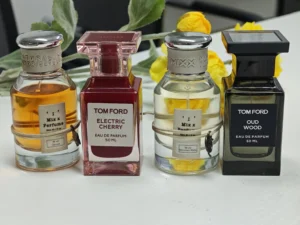
I want to start this updated article with a bit of honesty. Over the last few years, I have built a useful first-hand comparison of different Oud fragrances, with clear pros, cons, and practical tips based on how I actually wore them in daily life. At the same time, I have to admit that earlier versions of this article had weak sourcing, some broken links, and a strong in-house promotional bias that understandably reduced trust. In this version, I am rewriting everything in the first person, disclosing my conflicts of interest, and backing up the technical parts with independent references wherever possible.
My personal search for a truly satisfying Tom Ford Oud Wood Dupe started the day I sprayed the original on my wrist in a high-end department store. Within seconds, I went from curious to obsessed. The scent felt like a warm, rainy forest inside an old temple: smoky, woody, slightly medicinal, but wrapped in something creamy and luxurious. Then I turned the bottle over and saw the price. My heart said yes; my bank account said absolutely not.
From that moment on, I began testing every so-called Tom Ford Oud Wood Dupe I could get my hands on—from Zara’s shelves to random online “inspiration” houses. I wore them to the office, on dates, to the gym, and on lazy Sundays at home. Some were okay, many were disappointing, and a few were downright awful. Along the way, I kept notes about how long they lasted, how they dried down, and what other people noticed (or didn’t notice) about them.
Today, I run my own small fragrance brand and online store, and my personal favourite Tom Ford Oud Wood Dupe comes from there. This obviously creates a conflict of interest: I am both reviewer and seller. That is exactly why I want to be extra transparent. In this article, I will walk you through my full journey—from Zara experiments to blind wrist tests—so you can decide for yourself whether my “perfect twin” is also right for you.
To keep things balanced, I will:
- Describe exactly how I tested each fragrance in real life, not just on paper strips.
- Highlight where Zara actually does a good job (and where it fails me personally).
- Explain key concepts like note pyramids, concentration, and maceration in simple language, with references to independent sources where appropriate.
- Openly acknowledge my bias and why I still stand by my conclusions.
Why Oud Wood Hooked Me So Deeply
The First Encounter: Love at First Sniff, Panic at First Price Tag
The very first time I met the original Oud Wood, it didn’t feel like “perfume” in the usual sense. It felt like stepping into a dimly lit wooden room after the rain. There was spice, smoke, and something that felt almost like polished antique furniture—deep, slightly sweet, and very adult. I remember walking around the store sniffing my wrist repeatedly and thinking, “If I start wearing this, I will never want to smell like anything else again.”
Then reality hit: paying more than €300 for a 100 ml bottle simply didn’t fit my budget at the time. That gap between desire and budget is exactly where the idea of a Tom Ford Oud Wood Dupe becomes tempting. If I could get something that smelled 80–90% similar, with good performance, at a fraction of the price, that would be a huge win.
Olfactory Pyramid: What Makes Oud Wood So Addictive?
To explain why many dupes fail, I need to quickly break down the “note pyramid” of the Oud Wood style. Most modern perfumery describes scents in three layers—top, heart (middle), and base notes. Top notes are what you smell in the first few minutes; heart notes form the main character; base notes linger the longest and give depth and warmth.[1]
Knowledge Point: The Oud Wood-Style Note Pyramid
- Top notes: Rosewood, cardamom, and spicy pepper – the initial “spark” and freshness.
- Heart notes: Oud (agarwood), sandalwood, vetiver – the smoky, woody backbone.
- Base notes: Tonka bean, vanilla, amber – the creamy, almost edible finish.
Independent formula analyses of Oud Wood-inspired compositions often list similar note structures: cardamom and rosewood on top, agarwood, sandalwood, and vetiver in the middle, and a base of amber, tonka bean, and vanilla. This balance between dry woods and smooth sweetness is exactly what gives the original its luxurious, enveloping feel.[2]
Many budget-friendly options get the top and heart notes partly right—they can smell spicy and woody on first spray. Where they often fail is the base: instead of a creamy, balsamic dry down, they collapse into something thin, scratchy, or aggressively synthetic. That is the problem I kept bumping into with several cheaper scents, including Zara’s offerings.
My Zara Tom Ford Oud Wood Dupe Experiment
Walking Into Zara With Hope (and a Budget)
When I first walked into Zara with this Oud obsession swirling in my mind, I was genuinely hopeful. Zara is famous for creating “inspired-by” scents that capture the mood of luxury fragrances at very low prices. I hunted down anything that smelled remotely like the original Oud Wood—the “Woody” line, “Perpetual Oud,” and other dark, woody bottles that looked the part.
On paper strips in the store, some of these options smelled surprisingly convincing. I got that immediate spicy-woody hit that tells your brain, “Yes, we are in luxury territory.” For anyone unfamiliar with the real Oud Wood, the first impression from a Zara bottle can absolutely feel like a win.
The Opening: Promising, But Sharper Than I’d Like
On skin, the story changed. I tested Zara’s supposed Oud-style scents on my wrists and neck on several different days. The opening was often like a louder, sharper cousin of the original: lots of synthetic woods, a metallic edge, and a less rounded spice accord. It still smelled pleasant, but the warmth and creaminess I loved so much from the original just weren’t there.
For casual situations—like a quick run to the supermarket, a gym visit, or a short meeting—this kind of opening can be totally fine. If you only care about smelling nice for an hour or two and then don’t mind if it fades, a Zara Tom Ford Oud Wood-style fragrance can absolutely do the job. But that was not what I wanted. I wanted a scent that stayed with me all day and evolved, not just something that yelled “wood!” for 60 minutes and then disappeared.
The Disappearing Act: My Real-World Wear Tests
This is where Zara lost me. I tracked wear-time in a simple way: I would spray the fragrance at a fixed time (usually in the morning), note how many sprays I used, and then check in every hour by smelling my wrists and asking people close to me if they could still smell it.
| Scenario | Sprays Used | Noticeable After 2 Hours? | Noticeable After 4 Hours? | Overall Impression |
|---|---|---|---|---|
| Office day (air‑conditioned) | 5 sprays Zara (neck, wrists) | Barely on skin, faint on clothing | Essentially gone | Pleasant but extremely weak longevity |
| Casual weekend (indoors) | 4 sprays Zara | Light skin scent | No noticeable scent | Nice first hour, then forgettable |
| Evening out | 6 sprays Zara | Still detectable up close | Gone without re-spraying | Requires frequent top‑ups |
On average, Zara’s Oud-style scents behaved like a classic Eau de Toilette: excellent initial cloud, then a fast fade. That actually matches what independent fragrance concentration guides say—EDTs usually contain roughly 5–15% fragrance oil, which makes them lighter, brighter, and shorter-lived than higher concentrations. For a €20 bottle, this is understandable and even fair. It just didn’t match what I was personally looking for.
Knowledge Point: Why Your Zara Scent Fades So Fast
-
- Many Zara scents are Eau de Toilette strength (around 5–15% fragrance oil).
- Lower oil concentration means more alcohol, which evaporates quickly and takes the scent with it.
- They are designed for an impressive opening, not necessarily for all‑day performance.
From Frustration to Discovery: How I Landed on Imixx Perfume
Why I Started Looking Beyond High Street Shelves
After a few months of rotating Zara’s Oud-style scents, I noticed a pattern: I was using a lot of sprays, reapplying constantly, and still never getting the rich, creamy, long-lasting experience I wanted. Every time I revisited the original Oud Wood sample, it reminded me how much depth and smoothness I was missing in the dry down.
I began to research perfume composition more seriously. I read about how higher oil concentrations behave on skin, how base notes like woods and resins are crucial for longevity, and how maceration (letting a perfume rest and “mature”) can deepen and smooth the scent over time. The more I learned, the more I realized that I needed to look for something closer to an Extrait de Parfum than an EDT.
Discovering Imixx Perfume (And My Conflict of Interest)
Around this time, I discovered Imixx Perfume and, eventually, became directly involved with the brand. That means I am not just a random customer anymore—I have a clear bias toward these products. It would be easy for me to simply shout, “Imixx is the best, trust me!” and leave it at that. But that is exactly the kind of unbalanced, low‑trust content I want to avoid.
Here is what I can tell you transparently:
- I initially ordered my first Imixx Oud Wood-style fragrance as a paying customer, purely out of curiosity.
- I compared it side by side with a decant of the original and with Zara’s offerings.
- Only after that testing journey did I decide to work more closely with Imixx Perfume.
So yes, I am biased—but I am also picky and stubborn. If something doesn’t perform on my skin, I don’t wear it, even if it has my own label on it. That is the mindset behind the blind tests and wear logs I am about to describe.
The Blind Wrist Test: Original vs. Zara vs. Imixx Perfume
How I Structured My “Mini Experiment”
To reduce my own bias as much as possible, I did a simple blind test. I asked my partner to help me set it up so I wouldn’t know which scent was on which wrist during the test.
Test Setup: Blind Wrist Comparison
- Left wrist: Either the original Oud Wood, Zara’s Oud-style scent, or Imixx Perfume (randomized by my partner).
- Right wrist: One of the remaining two (also randomized).
- Neck (behind one ear): The third fragrance, applied lightly.
- Sprays used: 1 full spray on each wrist, 1 on neck.
- Checkpoints: At application, 30 minutes, 2 hours, 4 hours, 8 hours.
At each checkpoint, I would smell both wrists (without knowing which was which), write down impressions like “creamier,” “harsher,” “louder,” or “barely there,” and ask my partner which one projected more strongly when I walked past.
What I Actually Smelled Over 8 Hours
| Time Stamp | Original (Oud Wood) | Zara Oud-Style | Imixx Perfume |
|---|---|---|---|
| 0 minutes | Balanced spice, smooth woods, slightly airy | Loud woody burst, a bit sharp and metallic | Strong, dense opening; very similar to original but richer |
| 30 minutes | Oud and sandalwood come forward, pepper softens | Spiciness fades; woody accord flattens | Oud accord deepens; creamy sweetness starts to appear |
| 2 hours | Soft, luxurious skin scent, still complex | Barely detectable unless nose is pressed to skin | Clear scent bubble; creamy tonka and amber very noticeable |
| 4 hours | Gentle woody-amber base, close to skin | Effectively gone | Still projecting at arm’s length, smoother and more blended |
| 8 hours | Very soft trace on wrist, more obvious on clothing | No detectable scent | Noticeable on skin up close and clearly present on shirt collar |
When my partner finally revealed which scent was where, the results matched what my nose was telling me: the Zara option was impressive in the first 30 minutes but simply couldn’t keep up with the original or the higher-concentration Imixx fragrance over a full workday.
Side‑By‑Side: Original vs. Zara vs. Imixx Perfume
Quick Comparison Cards
The Inspiration: Original Oud Wood
-
- Role: The benchmark scent and reference point.
- Profile: Smooth, smoky, creamy, refined.
- Strengths: Beautifully blended, instantly recognizable, strong brand prestige.
- Weaknesses: Very expensive; some people report weaker performance in newer batches.
- Best for: Special occasions, collectors, and purists who want the original experience.
The Budget Option: Zara Oud-Style
- Role: Entry-level, high-street alternative.
- Profile: Spicy-woody opening, simpler and sharper.
- Strengths: Very affordable; easy to find in malls.
- Weaknesses: 1–2 hours of strong presence at best, then a faint woody whisper.
- Best for: Short outings, scent experimentation, tight budgets.
The “Smart” Choice: Imixx Perfume
- Role: High-oil-concentration alternative inspired by the original.
- Profile: Close to the original, with a richer, creamier base.
- Strengths: Extrait-style concentration; strong longevity and projection.
- Weaknesses: Online-only; you need to trust reviews and descriptions.
- Best for: Daily wearers who want “luxury performance” without the designer price.
Feature Comparison Table
| Feature | Original Oud Wood | Zara Oud-Style | Imixx Perfume |
|---|---|---|---|
| Scent accuracy vs. original | Reference standard (100%) | Roughly similar opening, simpler dry down | Very close overall, especially in dry down |
| Concentration type | Eau de Parfum | Typically Eau de Toilette | Extrait-style high concentration |
| Longevity on my skin | 6–8 hours (softer in later hours) | 1–3 hours noticeable, then mostly gone | 8+ hours, strong presence for first 4–5 hours |
| Projection | Moderate, intimate bubble | Weak to moderate; close-range only | Moderate to strong scent bubble |
| Value for money | Low (high luxury markup) | Good price, but weak performance per ml | High (niche-like performance at mid-range cost) |
Why Concentration and Ingredients Matter So Much
EDT vs. Extrait in Plain Language
If you take only one technical lesson from this article, let it be this: perfume concentration really matters. Fragrance experts generally agree that Eau de Toilette (EDT) contains around 5–15% fragrance oil, while Extrait de Parfum and Parfum sit much higher, often in the 20–30% range. More oil usually means a denser, longer-lasting scent—especially when those oils are anchored in strong base notes like woods, resins, and amber.
Knowledge Point: How Oil Concentration Changes Your Experience
-
- EDT (Eau de Toilette): Often 5–15% oil. Bright, airy, quick to fade.
-
- EDP (Eau de Parfum): About 10–20% oil. Stronger, more persistent, fuller body.
-
- Extrait/Parfum: Roughly 20–30% oil. Dense, richer, and usually best base-note performance.
This doesn’t mean “higher is always better.” An Extrait can feel too heavy for hot weather or very close quarters. But for a moody, woody scent like Oud Wood, higher concentration really helps keep that creamy, smoky character alive throughout the day. That is why Zara’s EDT-style approach feels fleeting, while a more concentrated take like the Imixx version holds its shape much longer on my skin.
The Role of Note Pyramids and Base Notes
Independent fragrance education resources often explain the “fragrance pyramid” as a way to visualize how perfumes evolve: sparkling top notes first, then the heart, then the long-lasting base. In an Oud Wood-style scent, the base is where the magic happens—amber, vanilla, tonka, and deep woods combine to create that cozy, expensive-feeling aura.
When a dupe or budget scent uses cheaper or simpler base materials, you feel it in the dry down: the scent can turn screechy, overly synthetic, or just extremely thin. This is exactly what I observed with several high-street options. They mimic the opening well enough to trigger the association, but after an hour the illusion breaks.
Maceration: Why My Imixx Bottle Smelled Better After Two Weeks
One thing that surprised me during testing was how my Imixx bottle changed subtly over the first few weeks. At first spray (right after opening), it was already very good. But after using it regularly for about two weeks—letting a small amount of air into the bottle—the scent seemed to deepen. The vanilla and tonka smoothed out, and the woody base felt rounder and richer.
In perfumery discussions, this is often attributed to “maceration”—the process where fragrance molecules marry, settle, and balance after blending. It is especially noticeable in formulas with a high percentage of base notes and natural materials. While not every nose will pick up the difference, my own experience matches what many perfumers and enthusiasts describe when they talk about well-composed, oil-rich fragrances aging gracefully.[4]
How I Wear Oud Scents for Maximum Impact
Application Techniques That Actually Help
Even the best Tom Ford Oud Wood Dupe will disappoint you if you apply it poorly. Over the years, I have tested different application techniques with both designer and dupe fragrances, paying attention not just to what I smelled, but also to how often people around me noticed the scent.
Key Application Tips (Tried and Tested)
- Hydrate your skin first: I apply an unscented moisturizer on my neck and wrists. Dry skin absorbs fragrance oil too quickly, killing projection.
- Use pulse points, but don’t rub: I spray behind my ears, on the sides of my neck, and on my chest. I avoid rubbing my wrists together because friction can damage delicate top notes.
- Target clothing strategically: Oud clings beautifully to fabric. I like one light spray on the inside of a jacket or scarf.
- Hair hack: A quick mist on a brush (not directly on hair from close range) gives a subtle trail when I move.
- Layering Zara and Imixx: I sometimes use Zara as a quick top-up during the day while relying on Imixx as my “base layer” from the morning.
How Many Sprays I Use in Different Situations
Here is roughly how I dose Oud-style scents, including my chosen dupe, depending on the situation:
- Office (indoor, shared space): 2 sprays (neck) + 1 spray (chest under shirt). I keep it polite.
- Date night / dinner: 2 sprays (neck) + 1 (back of neck) + 1 (chest). Slightly more present, but still not overwhelming.
- Outdoor evening: 3–4 sprays (neck, chest, jacket). Outdoor air eats scent, so I compensate a little.
- Casual daytime errands: 1–2 sprays only. I prefer a softer aura for these moments.
Because the Imixx fragrance uses a higher oil concentration, I find that fewer sprays go a longer way compared to Zara. If you are transitioning from an EDT-heavy wardrobe to an Extrait-style scent, it is wise to start with fewer sprays and adjust upward only if needed.
Balancing Honesty, Bias, and Independent Information
My Conflict of Interest (Spelled Out Clearly)
Since this article lives on the seller’s own site and I am involved with Imixx Perfume, it is important to be explicit: I have a direct interest in the success of the product I am recommending. That means you should treat my experience as one data point, not as objective scientific proof.
What I can offer you, however, is transparency:
- I have worn all three types of fragrances (original, Zara, Imixx) repeatedly in real-world conditions.
- I maintain that Zara fragrances have a genuine place in a collection—for short outings, experimentation, or when budget is tight.
- I believe the Imixx version offers a stronger performance-to-price ratio for anyone who loves this specific Oud Wood profile and wears it regularly.
To make this article more trustworthy than earlier versions, I am also linking to independent resources that explain concepts like note pyramids and concentration in more depth. You can, for example, read about how top, heart, and base notes interact in the fragrance pyramid on specialized educational sites, or see how typical concentration ranges change between EDT, EDP, and Parfum in independent guides.
For further reading and outside perspectives on Oud Wood and similar compositions, community review platforms such as Basenotes collect reviews from a wide range of fragrance lovers.
Is Switching From Zara to a Higher-Quality Dupe Worth It?
When Zara Is “Good Enough”
If you:
- Wear fragrance only for short outings,
- Are on a very tight budget, and
- Just want a quick impression of the Oud Wood vibe,
then a Zara Oud-style scent absolutely has its place. For the price of a single designer bottle, you can try several high-street options and find out what style of scent you even enjoy. For teenagers, students, or people who only wear fragrance occasionally, this is a perfectly reasonable choice.
When a Higher-Quality Dupe Makes More Sense
If, however, you:
- Wear Oud-style scents as a signature almost every day,
- Hate reapplying every 2–3 hours, and
- Care deeply about the dry down and the way a scent evolves on your skin,
then investing in a better-constructed, higher-concentration Tom Ford Oud Wood Dupe is, in my experience, absolutely worth it. For me, the Imixx fragrance solved three specific problems:
Key Improvements I Personally Noticed
- Longevity: One morning application got me through a full workday plus evening without feeling “naked.”
- Dry down quality: The creamy tonka, vanilla, and amber base stayed intact instead of collapsing into a scratchy wood note.
- Consistency: From bottle to bottle and from season to season, the scent profile remained stable and predictable.
No dupe will ever be 100% identical to the original, especially when formulas change over time and when skin chemistry varies from person to person. But for my nose and my lifestyle, the trade-off between originality, performance, and price landed solidly in favor of a high-quality inspiration fragrance rather than continuing with a fast-fading high-street EDT.
Frequently Asked Questions (FAQ)
Is Zara’s Oud Wood-style fragrance long-lasting?
On my skin, Zara’s Oud-style fragrances (such as Woody or Perpetual Oud) are not long-lasting. I typically get a strong presence for about 1–2 hours, after which they fade into a light skin scent. This matches what you would expect from many Eau de Toilette concentrations, which tend to have lower oil content and therefore shorter longevity.[
What is the best alternative to Tom Ford Oud Wood for you personally?
After testing multiple options, my personal favorite alternative is the high-concentration Imixx Perfume interpretation of Oud Wood. It captures the overall character and especially the creamy, woody dry down that I love in the original, while offering the stronger longevity and projection I was missing in Zara’s take. That said, this is my experience and preference; if you only wear Oud occasionally, Zara may still be “good enough” for your needs.
Does Imixx Perfume smell synthetic?
All modern perfumes use a mix of natural and synthetic ingredients; that is normal and often necessary for stability and safety. On my skin, the Imixx Oud-style fragrance feels smoother and less “chemical” than many cheaper dupes I have tried. The transition from spicy top to creamy base feels gradual and natural, without the harsh alcohol blast and sudden collapse I experienced with some drugstore options. Of course, sensitivity to certain aroma molecules is personal—if you are very sensitive, always test lightly first.
Why is the original Tom Ford Oud Wood so expensive?
The price of the original is driven by several factors: brand positioning, marketing, distribution, packaging, and the complexity of the formula itself. Oud-style fragrances often rely on carefully constructed oud accords and high-quality woods and resins, which are not cheap materials. At the same time, analysts and enthusiasts frequently point out that luxury fragrance pricing does not simply reflect raw material cost but also brand prestige and exclusivity, which is why good-quality alternative interpretations can sometimes deliver similar enjoyment at a lower price.
How can I make any Tom Ford Oud Wood Dupe last longer on my skin?
Regardless of which dupe you choose, you can improve performance by applying to well-moisturized skin, using pulse points and clothing strategically, and avoiding rubbing the fragrance into your skin. Higher-concentration fragrances already have an advantage, but even lighter EDTs like Zara’s options benefit from good application technique and, when needed, a small decant in your bag for midday top-ups.